I. Global Humanoid Robot Industry
According to Morgan Stanley’s report <Humanoid Robot 100: Mapping the Global Humanoid Robot Value Chain>, the global humanoid robot industry chain is divided into three major segments: "brain", "body", and "integrators". Among them, there are 22 companies in the "brain" segment, focusing on AI models, software, and semiconductor technologies; 64 companies in the "body" segment, covering sensors, batteries, actuators, and other mechanical and energy components; and 22 "integrators", including companies from the automotive, consumer electronics, internet, and traditional robotics sectors.
Figure 1: Distribution of companies in the Top 100 global humanoid robot industry across the value chain in 2024
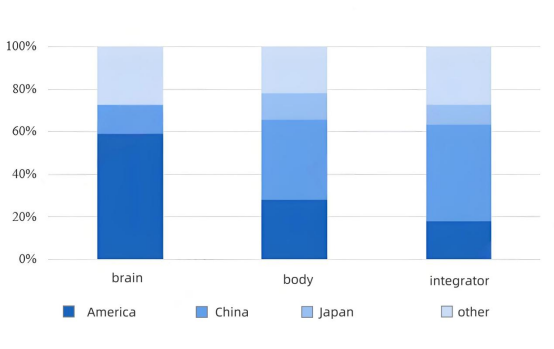 Source: Morgan Stanley, World BusinessPlan
The brain is the core of enabling intelligence in robots. Humanoid robots consist of three parts: the brain, the cerebellum, and the limbs. The “brain” is mainly based on large AI models, which make optimal decisions autonomously based on information such as the environment, tasks, and goals, thereby enabling functions like autonomous navigation, task execution, and human–machine interaction. Robot large models differ somewhat from general-purpose large models and cannot be directly shared, as the latter must account for real-time interaction with the physical world, making the technical difficulty higher.
The technical pathways for embodied intelligence brains are still in the exploration stage. From a technical perspective, the current “brain” approaches based on large models are being explored in parallel and are gradually evolving toward end-to-end large models. There are three main mainstream paths:
1) The end-to-end VLA technical route, which uses a single model to directly learn from perception to action.
2) The hierarchical “brain + cerebellum” technical route.
3) The world model technical route.
VLA still has significant room for improvement, research on world models is still at a very early stage, while the brain–cerebellum approach enables modularity, generalization, and interpretability.
According to the “Robot Yearbook” published by Morgan Stanley in December 2025, over the past five years, patent data shows concentration in core technology areas such as structural design, intelligent perception, and drive control.
Figure 2: Number of global humanoid robot patent applications from 2021 to 2025 (unit: number of cases)
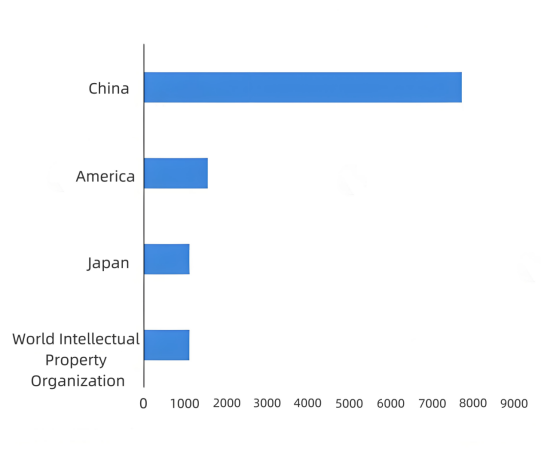 Source: Morgan Stanley, World BusinessPlan
The humanoid robot industries of the United States, Japan, and China have formed a distinctly differentiated competitive landscape: The United States, leveraging core AI algorithms and abundant capital, is led by giants such as Tesla and Boston Dynamics, focusing on breakthroughs in general-purpose humanoid robot technology and cross-scenario generalization. It has invested $5 billion in a “Physical AI R&D Fund,” aiming to dominate over 40% of the global market share by 2030 and achieve a production capacity of one million units by 2027; Japan, grounded in its strengths in precision manufacturing and core component technologies, with companies like Toyota and Kawasaki Heavy Industries, is deeply engaged in niche sectors such as healthcare, medical care, and industry. It emphasizes mass production of specialized models and high safety standards to meet the needs of an aging society, planning to achieve mass production of caregiving and industrial humanoid robots by 2027 and continuously consolidate its global leadership in segmented fields; China, relying on policy support, a complete industrial chain, and advantages in diverse application scenarios, with companies like Zhiyuan Robotics and UBTECH, is accelerating the commercial mass production of humanoid robots across consumer, industrial, and healthcare sectors through low-cost strategies. It is expected that by 2027, the entire industrial chain will be independently controllable, reaching a market scale of hundreds of billions.
Table of Contents for the Forecast and Investment Strategy Planning Analysis Report on the Development Prospects of the U.S. Humanoid Robot (Android) Industry from 2026 to 2030
Overview Section
Chapter 1: Overview of the Humanoid Robot Industry and Explanation of Data Sources
- 1.1 Definition of the Humanoid Robot Industry
- 1.1.1 Concept/Definition of Humanoid Robots
- 1.1.2 Basic Characteristics of Humanoid Robots
- 1.1.3 Differentiation of Similar Concepts Related to Humanoid Robots
- 1.2 Classification of Humanoid Robots
- 1.3 Industry Classification of Humanoid Robots
- 1.3.1 Economic Industry Classification of the Humanoid Robot Market
- 1.3.2 Industrial Classification of Humanoid Robots
- 1.4 Explanation of Professional Terminology for Humanoid Robots
- 1.5 Regulatory and Standardization System for the Humanoid Robot Industry
- 1.5.1 Introduction to the Regulatory System of the Humanoid Robot Industry
- 1. Humanoid Robot Industry Regulatory System
- 2. Functions of Regulatory Authorities in the Humanoid Robot Industry
- 1.5.2 Current Status of Standard System Development in the Humanoid Robot Industry
- 1.6 Explanation of the Scope of This Report
- 1.7 Explanation of Data Sources and Statistical Standards of This Report
- 1.7.1 Authoritative Data Sources of This Report
- 1.7.2 Research Methods and Statistical Standards of This Report
Current Situation Section
Chapter 2: Current Development Status and Market Trend Insights of the Global Humanoid Robot Industry
- 2.1 Development History of the Global Humanoid Robot Industry
- 2.2 Market Size of the Global Humanoid Robot Industry
- 2.3 Demand for Humanoid Robots Globally
- 2.4 Competitive Landscape of the Global Humanoid Robot Industry
- 2.4.1 Major Competitive Companies in the Global Humanoid Robot Industry
- 2.4.2 Regional Competitive Landscape of the Global Humanoid Robot Industry
- 2.5 Investment and Financing Status of the Global Humanoid Robot Industry
- 2.6 Market Outlook of the Global Humanoid Robot Industry
- 2.6.1 Market Forecast for the Global Humanoid Robot Industry
- 2.6.2 Development Trend Projections for the Global Humanoid Robot Industry
- 2.7 Summary of Development Experience and Useful Lessons from the Global Humanoid Robot Industry
Chapter 3: Current Technological Development Status of the Global and U.S. Humanoid Robot Industry
- 3.1 Introduction to the Working Principles of Humanoid Robots
- 3.2 Production Process of Humanoid Robots
- 3.3 Main Technological Pathways of Humanoid Robots
- 3.3.1 Overview of Overall Technological Pathways
- 3.3.2 “Brain” Technology Routes
- 1. Types of Brain Technologies Based on Large Models
- 2. Evolution of Brain Algorithm Technology Routes Based on Large Models
- 3. Summary of Strategic Positions of Different Technology Routes
- 3.3.3 “Cerebellum” Technology Routes
- 1. Sensor Technology Routes for Environmental Perception
- 2. Motion Control Algorithm Technology Routes
- 3.3.4 Drive Technology Routes
- 1. Selection of Joint Actuator Technology Routes
- 2. Selection of Motor Technology Routes
- 3.3.5 Dexterous Hand Technology Routes
- 1. Structure and Functions of Dexterous Hands
- 2. Drive Forms and Transmission Forms of Dexterous Hands
- 3. Selection of Dexterous Hand Technology Routes
- 3.3.6 Material Technology Routes
- 1. Material Selection Requirements for Humanoid Robots
- 2. Material Technology Routes for Humanoid Robots
- 3.4 Analysis of Technological Innovation Achievements in the Humanoid Robot Industry
- 3.4.1 Publication of Academic Papers on Humanoid Robot Technology
- 3.4.2 Patent Applications and Disclosures in Humanoid Robot Technology
- 1. Patent Application Status
- 2. Major Patent Applicants
- 3. Main Regions of Patent Applications
- 3.4.3 Latest Scientific Research and Innovation Trends in Humanoid Robot Technology
- 1. Global
- 2. United States
- 3.5 Analysis of Technological Differences Between China and Other Countries in Humanoid Robots
Chapter 4: Analysis of the Current Development Status of the Humanoid Robot Industry in the United States
- 4.1 Introduction to the Development History of the U.S. Humanoid Robot Industry
- 4.2 Market Size of the U.S. Humanoid Robot Industry
- 4.3 Study on Market Demand for Humanoid Robots in the United States
- 4.3.1 Overview of Demand for Humanoid Robots in the United States
- 4.3.2 Characteristics of Demand for Humanoid Robots in the United States
- 4.3.3 Expected Market Demand Cycle for Humanoid Robots in the United States
- 4.3.4 Potential of Humanoid Robots to Fill Labor Gaps in the United States
- 4.3.5 Sales Volume of Humanoid Robots in the United States
- 4.4 Research Investment Status in the U.S. Humanoid Robot Industry
- 4.4.1 Investment in Research Funds
- 4.4.2 R&D Investment by Related Enterprises
- 4.5 Foreign Trade Study of the U.S. Humanoid Robot Industry
- 4.5.1 Overview of Import and Export Trade in the U.S. Robot Industry
- 4.5.2 Import Trade Status of the U.S. Robot Industry
- 1. Scale of Import Trade
- 2. Import Price Levels
- 3. Structure of Imported Products
- 4.5.3 Export Trade Status of the U.S. Robot Industry
- 1. Scale of Export Trade
- 2. Export Price Levels
- 3. Structure of Exported Products
- 4.5.4 Analysis of Influencing Factors and Development Trends in U.S. Robot Industry Import and Export Trade
- 4.6 Analysis of the Commercialization Process and Pain Points in the U.S. Humanoid Robot Industry
- 4.6.1 Commercial Deployment Progress of Humanoid Robots in the United States
- 4.6.2 Pain Points in the Commercialization of Humanoid Robots in the United States
- 1. Poor generalization capability of algorithms and models
- 2. High hardware costs
- 3. Data privacy handling
Chapter 5: Market Competition and Investment & Financing in the U.S. Humanoid Robot Industry
- 5.1 Analysis of Market Participants in the U.S. Humanoid Robot Industry
- 5.1.1 Types of Market Participants in the U.S. Humanoid Robot Industry
- 5.1.2 Entry Modes of Enterprises in the U.S. Humanoid Robot Industry
- 5.1.3 Scale of Enterprise Numbers in the U.S. Humanoid Robot Industry
- 5.1.4 Regional Distribution of Enterprises in the U.S. Humanoid Robot Industry
- 5.1.5 Analysis of Representative Enterprises in the U.S. Humanoid Robot Industry
- 5.2 Competitive Landscape of the U.S. Humanoid Robot Market
- 5.2.1 Competitive Structure of the Humanoid Robot Market
- 5.2.2 Competition in Core Humanoid Robot Products
- 1. Core Product Parameters
- 2. Types of Core Products
- 5.2.3 Competition in Key Mainstream Technologies of Humanoid Robots
- 1. Competitive Landscape of Vision Solutions
- 2. Competitive Landscape of Human-Computer Interaction Technologies
- 5.2.4 Porter’s Five Forces Model Analysis Chart for Humanoid Robots
- 5.2.5 Domestic Manufacturing Space for Humanoid Robots
- 5.3 Investment and Financing Dynamics and Popular Tracks in Humanoid Robots
- 5.3.1 Main Sources of Funding for Humanoid Robots
- 5.3.2 Composition of Investment and Financing Entities in Humanoid Robots
- 5.3.3 Investment and Financing Dynamics in the Humanoid Robot Industry
- 1. Summary of Investment and Financing Events
- 2. Statistical Analysis of Investment and Financing Events
- 3. Distribution of Financing Rounds
- 4. Popular Investment and Financing Regions
- 5.3.4 Mergers and Acquisitions of Humanoid Robot Enterprises
Chapter 6: Overview of the U.S. Humanoid Robot Industry Chain and Supporting Industry Layout
- 6.1 U.S. Humanoid Robot Industry Chain — Analysis of Industrial Structural Attributes
- 6.1.1 Overview of the Humanoid Robot Industry Chain (Supply Chain)
- 6.1.2 Ecosystem Map of the Humanoid Robot Industry Chain
- 6.1.3 Regional Heat Map of the Humanoid Robot Industry Chain
- 6.2 U.S. Humanoid Robot Value Chain — Analysis of Industrial Value Attributes
- 6.2.1 Analysis of Cost Input Structure in the Humanoid Robot Industry
- 6.2.2 Analysis of Price Transmission Mechanism in the Humanoid Robot Industry
- 6.3 Market Analysis of Core Components for U.S. Humanoid Robots
- 6.3.1 Overview of Core Components for Humanoid Robots
- 6.3.2 Current Development Status of the Core Components Market for Humanoid Robots
- 1. Reducers
- 2. Servo Motors
- 3. Sensors
- 4. Controllers
- 6.3.3 Trends and Prospects of the Core Components Market for Humanoid Robots
- 6.4 U.S. AI Machine Vision Market Analysis
- 6.4.1 Overview of AI Machine Vision
- 6.4.2 Current Development Status of the AI Machine Vision Market
- 6.4.3 Trends and Prospects of the AI Machine Vision Market
- 6.5 U.S. AI Chip Market Analysis
- 6.5.1 Overview of AI Chips
- 6.5.2 Current Development Status of the AI Chip Market
- 6.5.3 Trends and Prospects of the AI Chip Market
- 6.6 Summary of the Impact of Supporting Industry Layout on the Development of the Humanoid Robot Industry
Chapter 7: Current Development Status of the Midstream Market in the U.S. Humanoid Robot Industry
- 7.1 Current Development Status of Segmented Product Markets in the U.S. Humanoid Robot Industry
- 7.1.1 Comprehensive Comparison of Segmented Products in the Humanoid Robot Industry
- 7.1.2 Market Structure of Segmented Products in the Humanoid Robot Industry
- 7.2 Analysis of a Segmented Market in the U.S. Humanoid Robot Industry: Humanoid Robot Body Manufacturing
- 7.2.1 Overview of Humanoid Robot Body Manufacturing
- 1. Humanoid Robot Design
- 2. Humanoid Robot Assembly
- 3. Humanoid Robot Testing
- 7.2.2 Trends and Prospects of Humanoid Robot Body Manufacturing
- 7.3 Analysis of a Segmented Market in the U.S. Humanoid Robot Industry: Humanoid Robot System Integration
- 7.3.1 Overview of Humanoid Robot System Integration
- 7.3.2 Current Development Status of the Humanoid Robot System Integration Market
- 1. Motion Control
- (1) Principles of Humanoid Robot Motion Control
- (2) Real-time Control Systems as a Key Component
- (3) Industry Chain Value Shifting Toward Algorithm Development
- 2. Integration of Sensors and Intelligent Autonomous Control Systems
- 3. AI Brain
- (1) Construction of Vision and Neural Networks
- (2) OpenAI’s Empowerment of the AI Brain
- 7.3.3 Trends and Prospects of Humanoid Robot System Integration
Chapter 8: Analysis of Market Potential by Segmented Application Scenarios in the U.S. Humanoid Robot Industry
- 8.1 Distribution of Application Scenarios / Industry Fields in the U.S. Humanoid Robot Industry
- 8.1.1 Distribution of Humanoid Robot Application Scenarios in the U.S.
- 8.1.2 Distribution of Industry Applications for Humanoid Robots in the U.S.
- 8.2 Analysis of Segmented Application Scenarios for U.S. Humanoid Robots — Industrial Manufacturing Sector
- 8.2.1 Development of Industrial Robots in the U.S.
- 1. Application Status
- (1) Automotive intelligent manufacturing sector
- (2) Electronics and electrical intelligent manufacturing sector
- (3) Smart home appliance intelligent manufacturing sector
- 2. Production and sales volume of industrial robots
- 8.2.2 Competitiveness Analysis of Humanoid Robots in the Industrial Sector
- 8.2.3 Application Prospect Analysis of Humanoid Robots in the Industrial Sector
- 1. Automotive manufacturing
- 2. 3C electronics manufacturing
- 3. Smart logistics
- 4. Hazardous operations
- 8.2.4 Demand Potential Analysis of Humanoid Robots in the Industrial Sector
- 8.3 Analysis of Segmented Application Scenarios for U.S. Humanoid Robots — Commercial Service Sector
- 8.3.1 Development of Service Robots in the U.S.
- 8.3.2 Competitiveness Analysis of Humanoid Robots in the Commercial Service Sector
- 8.3.3 Application Prospect Analysis of Humanoid Robots in the Commercial Service Sector
- 1. Household services and companionship
- 2. Healthcare and wellness
- 3. Education and scientific research
- 8.3.4 Demand Potential Analysis of Humanoid Robots in the Commercial Service Sector
- 8.4 Analysis of Segmented Application Scenarios for U.S. Humanoid Robots — Military Sector
- 8.4.1 Development of Military Robots in the U.S.
- 1. Functions of military robots
- 2. Development trends of military robots
- 8.4.2 Competitiveness Analysis of Humanoid Robots in the Military Sector
- 8.4.3 Application Prospect Analysis of Humanoid Robots in the Military Sector
- 1. Disaster rescue
- 2. Other scenarios
- 8.4.4 Demand Potential Analysis of Humanoid Robots in the Military Sector
Chapter 9: Case Studies of Corporate Layout in the Global and U.S. Humanoid Robot Sector
- 9.1 Overview and Comparison of Corporate Layout in the Global and U.S. Humanoid Robot Sector
- 9.2 Analysis of Corporate Layout in the Global and U.S. Humanoid Robot Sector
- 9.2.1 Tesla — Optimus
- 1. Company development history and basic information
- (1) Company development history
- (2) Basic company information
- 2. Company business structure and operations
- (1) Overall business structure
- (2) Overall operating conditions
- 3. Company’s humanoid robot business layout and development status
- 4. Tracking of the latest developments in the company’s humanoid robot business layout
- 5. Analysis of strengths and weaknesses of the company’s humanoid robot business layout
- 9.2.2 Boston Dynamics — Atlas
- 1. Company development history and basic information
- (1) Company development history
- (2) Basic company information
- 2. Company business structure and operations
- 3. Company’s humanoid robot business layout and development status
- 4. Tracking of the latest developments in the company’s humanoid robot business layout
- 5. Analysis of strengths and weaknesses of the company’s humanoid robot business layout
- 9.2.3 Agility Robotics — Digit bipedal robot
- 1. Company development history and basic information
- (1) Company development history
- (2) Basic company information
- 2. Company business structure and operations
- (1) Overall business structure
- (2) Overall operating conditions
- 3. Company’s humanoid robot business layout and development status
- 4. Tracking of the latest developments in the company’s humanoid robot business layout
- 5. Analysis of strengths and weaknesses of the company’s humanoid robot business layout
- 9.2.4 UBTECH — Walker
- 1. Company development history and basic information
- (1) Company development history
- (2) Basic company information
- 2. Company business structure and operations
- (1) Overall business structure
- (2) Overall operating conditions
- 3. Company’s humanoid robot business layout and development status
- 4. Tracking of the latest developments in the company’s humanoid robot business layout
- 5. Analysis of strengths and weaknesses of the company’s humanoid robot business layout
- 9.2.5 Xiaomi — CyberOne (Iron Man)
- 1. Company development history and basic information
- (1) Company development history (2) Basic company information
- 2. Company business structure and operations
- (1) Overall business structure
- (2) Overall operating conditions
- 3. Company’s humanoid robot business layout and development status
- 4. Tracking of the latest developments in the company’s humanoid robot business layout
- 5. Analysis of strengths and weaknesses of the company’s humanoid robot business layout
- 9.2.6 Figure AI — Figure 1
- 1. Company development history and basic information
- (1) Company development history
- (2) Basic company information
- 2. Current business operations
- 3. Company’s humanoid robot business layout and development status
- 4. Tracking of the latest developments in the company’s humanoid robot business layout
- 5. Analysis of strengths and weaknesses of the company’s humanoid robot business layout
- 9.2.7 Fourier Intelligence — GR-2
- 1. Company development history and basic information
- (1) Company development history
- (2) Basic company information
- 2. Company business structure and operations
- 3. Company’s humanoid robot business layout and development status
- 4. Tracking of the latest developments in the company’s humanoid robot business layout
- 5. Analysis of strengths and weaknesses of the company’s humanoid robot business layout
- 9.2.8 CloudMinds — Cloud Ginger
- 1. Company development history and basic information
- (1) Company development history
- (2) Basic company information
- 2. Company business structure and operations
- (1) Overall business structure
- (2) Financing history
- 3. Company’s robot business layout and development status
- 4. Tracking of the latest developments in the company’s robot business layout
- 5. Analysis of strengths and weaknesses of the company’s humanoid robot business layout
- 9.2.9 Zhiyuan Robotics — Expedition A1
- 1. Company development history and basic information
- (1) Company development history
- (2) Basic company information
- 2. Company business structure and operations
- 3. Company’s humanoid robot business layout and development status
- 4. Analysis of strengths and weaknesses of the company’s humanoid robot business layout
- 9.2.10 Unitree Robotics — Unitree G1
- 1. Company development history and basic information
- (1) Company development history
- (2) Basic company information
- 2. Company business structure and operations
- 3. Company’s humanoid robot business layout and development status
- 4. Analysis of strengths and weaknesses of the company’s humanoid robot business layout
Chapter 10: Policy Environment and Development Potential of the U.S. Humanoid Robot Industry
- 10.1 Summary and Interpretation of Humanoid Robot Industry Policies
- 10.2 PEST Analysis of the Humanoid Robot Industry
- 10.3 Analysis of Opportunities and Challenges in the U.S. Humanoid Robot Industry
- 10.4 Evaluation of Development Potential in the Humanoid Robot Industry
- 10.5 Key Future Growth Drivers of the Humanoid Robot Industry
- 10.5.1 Expansion of Application Scenarios
- 1. Expansion of current application coverage
- 2. Coverage of technological R&D hotspots
- 3. Coverage encouraged at the policy level
- 10.5.2 Explosive Growth in Demand for Core Components
- 10.5.3 Cost Reduction Promoting Mass Production and Commercialization
- 10.6 Forecast of Development Prospects for the Humanoid Robot Industry
- 10.7 Insights into Development Trends of the Humanoid Robot Industry
- 10.7.1 Trends in Regulatory Frameworks
- 10.7.2 Directions and Trends in Technological Performance Development
- 1. Breakthroughs in core components and materials
- 2. Flexible actuation solutions for humanoid robots
- 3. AI-empowered humanoid robot design
- 4. Motion intelligence of humanoid robots
- 5. Multimodal large models for humanoid robots
- 6. Embodied intelligence in humanoid robots
- 7. Humanoid robots inspired by human body structure and neural mechanisms
- 10.7.3 Directions and Trends in Technology Applications
- 1. Software-defined robots
- 2. Vertical applications of humanoid robots
- 3. Large-scale humanoid robot factories
Chapter 11: Investment Strategies and Planning Recommendations for the U.S. Humanoid Robot Industry
- 11.1 Investment Risk Warnings for the Humanoid Robot Industry
- 11.1.1 Risk of lower-than-expected downstream demand
- 11.1.2 Risk of rising component prices
- 11.1.3 Risk of intensified market competition
- 11.2 Analysis of Investment Opportunities in the Humanoid Robot Industry
- 11.2.1 Investment Opportunities in Weak Links of the Humanoid Robot Industry Chain
- 1. High-precision encoders
- 2. Controllers
- 11.2.2 Investment Opportunities in Sub-sectors of the Humanoid Robot Industry
- 11.2.3 Investment Opportunities in Regional Markets of the Humanoid Robot Industry
- 11.3 Evaluation of Investment Value in the Humanoid Robot Industry
- 11.4 Investment Strategy Recommendations for the Humanoid Robot Industry
- 11.5 Recommendations for Sustainable Development of the Humanoid Robot Industry
List of Figures
Figure 1: Display of Humanoid Robots
Figure 2: Basic Characteristics of Humanoid Robots
Figure 3: Analysis of Similar Concepts of Humanoid Robots
Figure 4: Classification of Humanoid Robots
Figure 5: Industry Classification of Humanoid Robots 1
Figure 6: Explanation of Professional Terminology for Humanoid Robots
Figure 7: Regulatory System of the Humanoid Robot Industry in the United States
Figure 8: Regulatory Authorities and Self-Regulatory Organizations of the U.S. Humanoid Robot Industry
Figure 9: Standardization Development Path of the U.S. Humanoid Robot Industry
Figure 10: Technical Standards in the Humanoid Robot Industry
Figure 11: Scope Definition of This Report
Figure 13: Summary of Authoritative Data Sources of This Report
Figure 12: Main Research Methods and Statistical Standards of This Report
Figure 13: Development History of Global Humanoid Robots
Figure 14: Development History of Tesla Humanoid Robot Products
Figure 15: Global Humanoid Robot Market Size from 2023 to 2025 (Unit: USD 100 Million)
Figure 16: Global Humanoid Robot Sales in 2024 (Unit: Units)
Figure 17: Comparison of Global Humanoid Robot Companies and Representative Products
Figure 18: Regional Competitive Landscape of the Global Humanoid Robot Industry from 2023 to 2025 (Unit: %)
Figure 19: Summary of Publicly Disclosed Financing Events in the Global Humanoid Robot Industry from 2020 to 2025
Figure 20: Forecast of the Global Humanoid Robot Market from 2026 to 2032 (Unit: USD 100 Million)
Figure 21: Summary of Development Experience and Lessons from the Global Humanoid Robot Industry
Figure 22: Working Principles of Humanoid Robots
Figure 23: Production Process of Humanoid Robots
Figure 24: Overview of the Overall Technical Path of Humanoid Robots
Figure 25: RoboCat Supporting Multiple Embodiments and Control Modes
Figure 26: RoboCat Self-Improvement Process
Figure 27: Introduction to Main Sensors of Humanoid Robots
Figure 28: Comparison of Four Types of Environmental Perception Sensors for Humanoid Robots
Figure 29: Comparison of Pure Vision and LiDAR Solutions
Figure 30: Comparison of Pure Vision and LiDAR Solutions
Figure 31: Competitiveness Comparison of Environmental Perception Technology Routes for Humanoid Robots
Figure 32: Evaluation Standards for Different Technology Developments in the Humanoid Robot Industry
Figure 33: Iterative Development of “Cerebellum” Motion Control Algorithms
Figure 34: Classification and Characteristics of Rotary Actuators
Figure 35: Comparison of Three High-Performance Robot Drive (Actuator) Solutions
Figure 36: Actuator Solutions of Major Humanoid Robot Manufacturers
Figure 37: Classification and Characteristics of Rotary Actuators
Figure 38: Classification and Characteristics of Linear Actuators
Figure 39: Classification of Dexterous Hands by Finger Joints
Figure 40: Overview of Structural Design Solutions for Dexterous Hands
Figure 41: Comparison of Different Transmission Solutions for Dexterous Hands
Figure 42: Comparison of Different Drive Motor Solutions for Dexterous Hands
Figure 43: Comparison of Different Reducer Solutions for Dexterous Hands
Figure 44: Performance Comparison of Different Transmission Methods for Dexterous Hands
Figure 45: Main Application Scenarios of Different Transmission Methods for Dexterous Hands
Figure 46: Comparison of Different Materials for Humanoid Robots
Figure 47: Number of Published Academic Papers on Humanoid Robots Globally and in the U.S. from 2006 to 2025 (Unit: Papers)
Figure 48: Number of Invention Patent Applications in the Global and U.S. Humanoid Robot Industry from 2006 to 2024 (Unit: Cases)
Figure 49: Top Patent Applicants in the Global Humanoid Robot Industry as of 2024 (Unit: Cases)
Figure 50: Top Patent Application Regions in the Global Humanoid Robot Industry as of 2024 (Unit: Cases)
Figure 51: Latest Scientific Research in Humanoid Robot Technology
Figure 52: Analysis of Technological Differences Between Domestic and Foreign Humanoid Robots
Figure 53: Development History of Humanoid Robots (Androids) in the United States
Figure 54: Market Size of the U.S. Humanoid Robot Industry in 2024 (Unit: USD 100 Million)
Figure 55: Analysis of Demand Scenarios and Application Potential of Humanoid Robots in the United States
Figure 56: Analysis of Commercial Application Scenarios and Demand Characteristics of Humanoid Robots in the United States
Figure 57: Changes in Expected Value Across Different Demand Markets for Humanoid Robots
Figure 58: U.S. Labor Demand, Supply, and Labor Gap from 2019 to 2025 (Unit: 100 Million People, 10,000 People)
Figure 59: U.S. Humanoid Robot Sales in 2024 (Unit: Units)
Figure 60: Conversion Results of Research Fund Investments in the Humanoid Robot Industry (TOP10) as of 2025 (Unit: Items)
Figure 61: Customs Codes Involved in the Robot Industry
Figure 62: U.S. Robot Industry Import and Export Status from 2019 to 2024 (Unit: USD 100 Million)
Figure 63: Structure of Major Imported Products in the U.S. Robot Industry from 2021 to 2024 (Unit: Units, USD 10,000)
Figure 64: Import Trade Scale of the U.S. Robot Industry from 2021 to 2024 (Unit: USD 100 Million, 10,000 Units)
Figure 65: Import Price Levels of Major Products in the U.S. Robot Industry from 2021 to 2024 (Unit: USD 10,000/Unit)
Figure 66: Structure of Major Imported Products in the U.S. Robot Industry in 2024 (by Value) (Unit: %)
Figure 67: Structure of Major Exported Products in the U.S. Robot Industry from 2021 to 2024 (Unit: Units, USD 10,000)
Figure 68: Export Trade Scale of the U.S. Robot Industry from 2021 to 2024 (Unit: USD 100 Million, 10,000 Units)
Figure 69: Export Price Levels of Major Products in the U.S. Robot Industry from 2021 to 2024 (Unit: USD 10,000/Unit)
Figure 70: Structure of Major Exported Products in the U.S. Robot Industry in 2024 (by Value) (Unit: %)
Figure 71: Analysis of Influencing Factors and Development Trends of U.S. Robot Industry Import and Export Trade
Figure 72: Commercialization Process of Humanoid Robots in the United States
Figure 73: Major Challenges Faced by Humanoid Robots at the Technical Level
Figure 74: Types of Market Participants in the Humanoid Robot Industry
Figure 75: Entry Modes of Enterprises in the U.S. Humanoid Robot Industry
Figure 76: Number of New Enterprises and Total Enterprises in the U.S. Humanoid Robot Industry from 2018 to February 2025
Figure 77: Regional Distribution of Enterprises in the U.S. Humanoid Robot Industry as of February 2025 (Unit: Companies)
Figure 78: Development Status of Representative Companies in the U.S. Humanoid Robot Industry as of Early 2025
Figure 79: Analysis of the Global Humanoid Robot Industry Competitive Landscape in 2024
Figure 80: Comparison of Core Product Parameters of U.S. Humanoid Robot Enterprises in 2024
Figure 81: Analysis of Core Product Types and Application Fields of U.S. Humanoid Robot Enterprises
Figure 82: Comparison of Vision Solutions of U.S. Humanoid Robot Enterprises
Figure 83: Comparison of Human-Computer Interaction Technologies of U.S. Humanoid Robot Enterprises
Figure 84: Summary of Competitive Status of the U.S. Humanoid Robot Industry
Figure 85: Localization Substitution Rate and Lifecycle Analysis of Core Components in U.S. Humanoid Robots
Figure 86: Summary of Funding Sources in the U.S. Humanoid Robot Industry
Figure 87: Composition of Investment and Financing Entities in the U.S. Humanoid Robot Industry
Figure 88: Summary of Investment and Financing Events of U.S. Humanoid Robot Enterprises as of February 2025
Figure 89: Statistics of Investment and Financing Events and Amounts in the Humanoid Robot Industry from 2014 to 2025 (Unit: Cases, USD 100 Million)
Figure 90: Investment and Financing Rounds in the U.S. Humanoid Robot Industry from 2017 to 2025 (by Number of Events) (Unit: Cases)
Figure 91: Regional Distribution of Investment and Financing in the U.S. Humanoid Robot Industry as of February 2025 (by Number of Events) (Unit: Cases, %)
Figure 92: Structure of the Humanoid Robot Industry Chain
Figure 93: Map of the Humanoid Robot Industry Chain
Figure 94: Regional Distribution Map of Representative Enterprises in the Humanoid Robot Industry in 2024
Figure 95: Cost Composition of Humanoid Robots – Taking Optimus BOM as an Example (Unit: %)
Figure 96: Analysis of Price Transmission Mechanism in the Humanoid Robot Industry
Figure 97: Overview of Humanoid Robot Components
Figure 98: Overview of Humanoid Robot Reducers
Figure 99: Types of Reducer Supply Entities in the United States
Figure 100: Main Types of Servo Motors in the United States
Figure 101: Layout of Servo Motor Enterprises in the United States
Figure 102: Overview of Humanoid Robot Sensors
Figure 103: Overview of Humanoid Robot Sensors
Figure 104: Overview of Collaborative Robot Controllers
Figure 105: Market Share of Robot Controllers in the United States (Unit: %)
Figure 106: Machine Vision System Modules
Figure 107: Machine Vision Applications
Figure 108: Market Size of China’s Machine Vision Industry from 2016 to 2024 (Unit: USD 100 Million)
Figure 109: Market Size of China’s Machine Vision Industry from 2025 to 2030 (Unit: USD 100 Million)
Figure 110: Comparison of AI Chips in Different Application Scenarios (Unit: TOPS, W)
Figure 111: Output of Representative Enterprises’ AI Chip Products in the United States from 2020 to 2024 (Unit: 10,000 Units, 10,000 Chips)
Figure 112: U.S. Intelligent Computing Power Scale and AI Chip Market Size from 2020 to 2024 (Unit: EFLOPS, USD 100 Million)
Figure 113: Outlook for U.S. Intelligent Computing Power Scale from 2026 to 2030 (Unit: EFLOPS)
Figure 114: Summary of the Impact of Supporting Industry Layout on the Development of the Humanoid Robot Industry
Figure 115: Comparison of Popular Global Humanoid Robot Products
Figure 116: Overview of the Manufacturing Process of Humanoid Robot Bodies
Figure 117: Process Overview of Humanoid Robot Body Manufacturing – Design Stage:
Omitted… For the full table of contents, please inquire via email
II. Our Research Focus:
1. Policy Environment
Conduct comprehensive and in-depth research on the international and domestic economic environment in which the industry operates, analyze industrial policies and related supporting policy trends, and grasp the development direction of industry policies.
2. Investment Trends
Starting from newly built and ongoing projects of the year, focus on studying the current status of industry investment and existing issues, providing investors with development strategies and investment recommendations.
3. Market Supply and Demand
Relying on a powerful database, analyze the current state of market supply and demand through data, provide industry information, and scientifically forecast the development trends of supply and demand over the next 3–5 years.
4. Market Competition
Conduct comparative analysis of the operating conditions of the top 30 leading enterprises in each industry, including production, sales, profitability, as well as their respective business strategies and competitive advantages.
III. Our Advantages:
1. Abundant Expert and Information Resources
Leveraging proprietary databases and AI large-model systems, we possess rich data resources and have established a unique and comprehensive industry monitoring system.
2. Wide Industry Coverage with Strong Targeting
While conducting comprehensive industry analysis, we also perform in-depth analysis of key sub-sectors or products. The information provided is extensive and highly practical.
3. Comprehensive Content with Engaging Presentation
The report is based on empirical descriptions using the latest annual data, supported by abundant data and charts, emphasizing readability and visualization while avoiding clichés and empty statements.
4. Deep Insight and Foresight
Provide insights into future industry development directions, the evolution of competitive landscapes, as well as technical standards, market size, potential issues, and underlying challenges in industry development.
5. Creative and Constructive Strategic Recommendations
Analyze and demonstrate aspects such as investment characteristics, market size, supply and demand conditions, competitive landscape (structure and major competitors), and development trends of industries or specific products.